Sunday, August 10, 2014

A quick trip to Yangon (Rangoon)

How fast can a country change !

Back in 2008, a friend had told me he had visited Burma - now Myanmar - and described how he was one of the few tourists able to get around the country since a friend of his worked in the Indian Embassy and had thereby made special arrangements for him.

I looked up some reviews on tripadvisor and here is a sample of what some travelers had written
- the taxi I took from the airport to city center had a garden chair affixed in place of the front bucket seat
- when I gave a 5 dollar bill at the entrance to a pagoda, the first thing the official did was to iron out the creases
- the roads were full of potholes and they could be spotted from a hole in the taxi floor

How excited I was then for my weekend trip to Rangoon - now Yangon - and how sorely was I disappointed !

To be clear, it's a good thing that the country has changed. It is ridiculous of tourists to wish that a place is stuck in the past so that they can sample life from a different century for a week and then go back to their wired world. But my expectations were just that, and  the place was nowhere close to as exotic as I expected it to be.

For a start, the airport was modern. I got off the plane using an aero bridge . Now that sometimes does not even happen in Mumbai, especially if you are flying India's best airline Jet Airways. I got into a cab far decent than one I would usually take in Mumbai, and the roads were smooth barring the occasional small pothole .


 Traffic was reasonably disciplined , and some of the public buses were even air conditioned !  On the flip side, I did see more breakdowns per kilometer than any place I have been - seems like Myanmar is where all the second and third hand Japanese and Korean cars end up!

There certainly was a lot of the old on display. Most adult men and women wore traditional attire, women and babies had thankan - think Burmese sunscreen - applied to their faces . Chewing betelnut was still in fashion. But this was of life is on the way out, and fast! The most striking feature in downtown was the unbelievable number of mobile phone shops. Every alternate store in downtown was a mobile phone store !  On one patch of Lanmadaw street, I swear I saw 20 of them in a row on both sides of the road!  Now it's understandable that a country that has just opened up would go nuts about cellphones , but it seems a case of overenthusiasm and oversupply .


The city reminded me a little bit of South Bombay - no, not the upscale locales of Walkeshwar and Pedder Road, but the colonial aura of Fort, the narrow crowded streets of Mohammed Ali Road, and the busy docks of Bombay Port.

Indian cultural influences were omnipresent. A high percentage of street vendors were selling samosas. At sweet shops, it was difficult to find anything that didn't look Indian : jalebis, pedas , gulab jamuns, kachoris, the works. Paanwallahs could be found at every corner. There were restaurants offering Biryani and chicken dosa. Main Tera Hero was screening at a local theater. "Fevicol" and "Munni Badnaam" were blaring out of cellphones. A Dalmiya Cements advertising hoarding featured a beaming Mary Kom.
 

On Saturday, I visited two beautifully restored cathedrals, a Chinese temple, a South Indian temple, a Bengali Mosque, a Jewish Synagogue , and of course, a couple of pagodas, all in one day, all within walking distance of my hotel. The heart of downtown was the Sule Pagoda, sitting at the middle of the city's busiest traffic junction, and surrounded by important colonial-era buildings including the city hall and the high court. The outside boundary of the pagoda was lined with astrologers and palmists, who ironically had listed their math and science degrees as evidence of their skills in forecasting futures.

The synagogue was a haven of quiet in the midst of the bustling food markets of the city. The Jews were a thriving trading community in British Occupied Burma, but following the Japanese invasion during WWII and then the military rule, only 20 of them are left.


I was quite impressed with the interiors of the St Mary's Cathedral. Both side walls were lined with stained glass images of the Christian saints, and beneath each of them was a carved relief of some event of Jesus' life. The exterior was recently refurbished and has an exposed red brick finish with white lining, which gave the façade a unique look.

But undoubtedly the number one place to see was the Shwedagon Pagoda: A hundred meters tall, predominantly gold plated, with a 5 ton umbrella including 500 kilos of gold , and topped by an orb with 1800 carats of diamonds including a single 76 carat whopper. Probably belongs in a list of top 10, if not top 5, most beautiful Buddhist monuments in the world.
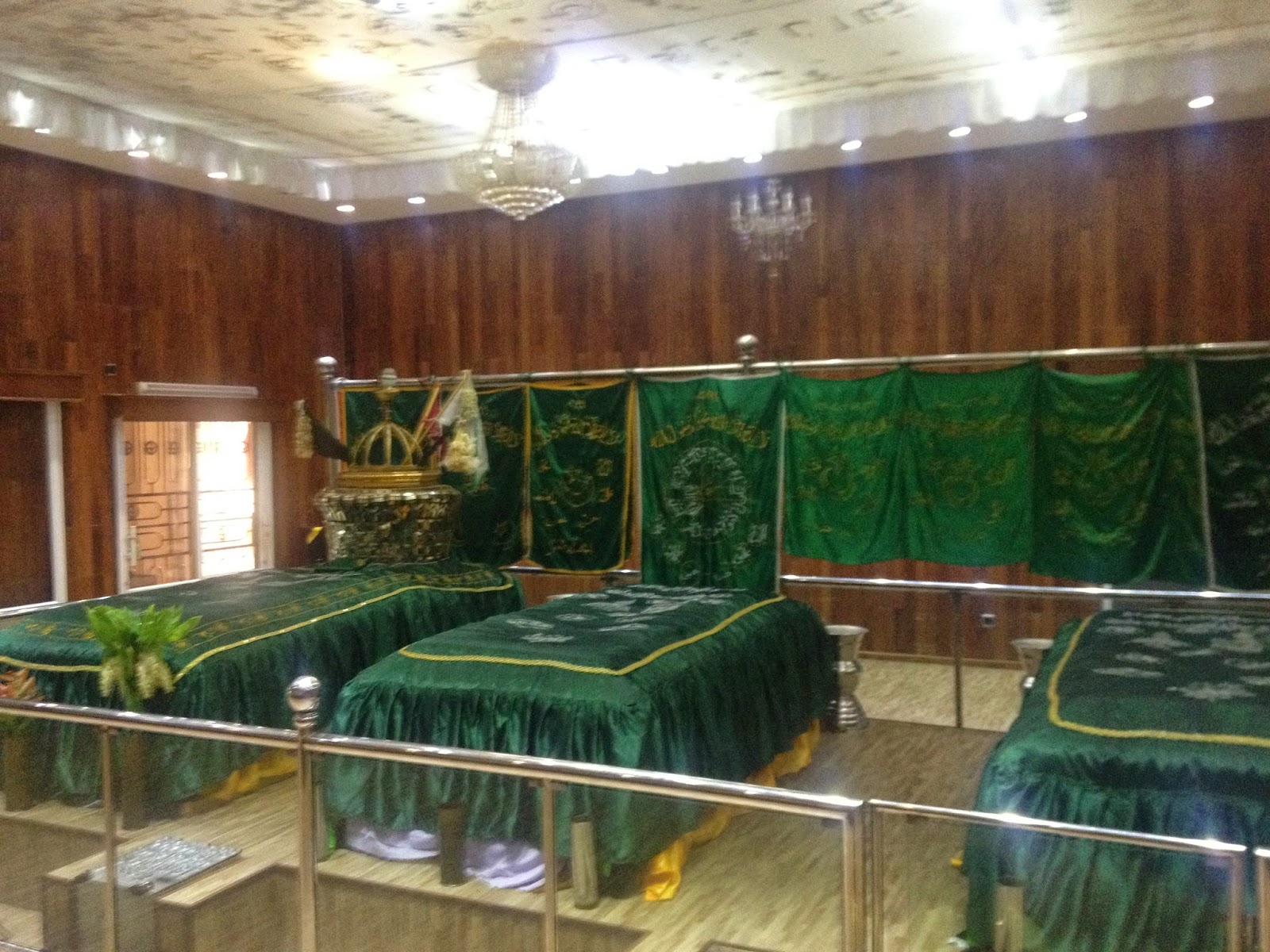


The next morning, my first stop was the grave of Bahadur Shah Zafar, the last Mughal Emperor of India who was exiled to Rangoon by the British post the 1857 mutiny . As in the cathedral and synagogue the day earlier, I was the only visitor present. It was a simple grave, long forgotten and lonely, pretty much like the Emperor - also a poet and Sufi - in his old age.

Thereafter I walked through what was a war memorial - except I don't know for which war, as sadly there was no plaque explaining, even in Burmese, what the place was about and there was no one to ask.

Thereafter I made quick visits to two nearby pagodas. The first one contained a gigantic 76 meter reclining Buddha, the largest of its kind in the country. The feet were etched with 108 symbols, groups of which represented the three worlds. The other pagoda, across the road, had a beautiful setting within a swathe of green and had a large ornate statue of the Buddha. In the same compound was a Buddhist school where anyone could walk in and take classes for free.

The last stop of the day was the colonial house of Burma's independence struggle hero, Bogyoke Aung San. Situated in a leafy suburb which now includes the German and Japanese embassies, it was modest by a general's standards. It was no bigger than a upper class family home, consisting of a living room, a dining room, a master bedroom, a library, a meeting room, and one room for the three kids - the youngest of whom was Aung San Su Kyi.

A slight drizzle that was on since the morning had by now turned into a torrential monsoon downpour. I hopped onto a local bus headed towards downtown, adding a bit more local flavor to the trip. I got off close to the Sule pagoda and headed to a South Indian restaurant full of locals. A masala dosa here meant a potato gravy on the side and a dosa filled with green beans and okra! I cleaned one up and ordered another plain one to make up for calories burnt walking all morning.

By the time I was through with lunch, the streets were flooded. I couldn't find a taxi and though it was a short walk back to the hotel, it took a while as I had to wade through nearly knee level water at times. I had compared Yangon to Mumbai the day before, and Mother Nature decided to unleash a Mumbai-style monsoon mayhem on me!  This was on top of two other mishaps earlier in the day: a careless step on a mossy floor leading to a harmless fall that nevertheless colored my backside green, and bumping my head straight into an ad hoarding as I held the umbrella too low for protection from rain.

As I headed back to the airport, there was one overwhelming thought in my mind: I wanted to see the world in a hurry, before every nation's national dress is denims and suits, and every corner of every street is lined with a Starbucks and a Mac.

But there was one more twist in the tale: the return flight was delayed by almost 7 hours!  The incoming flight from Singapore had to make an emergency landing in Bangkok, where it took a few hours to fix the "technical problem".  I read "Introduction to Hegel: A Graphic Guide" while waiting for the flight to arrive from Bangkok. When it finally did, I noticed a lot of the passengers were taking pictures of the TV screen showing the delayed departure time, to prove to their employers the legitimacy of the reason provided for being late at work the next day!


A Week in China

Jyoti and I made a 8 day trip to Shanghai, Xian and Beijing in April. In spite of all the research I had put into it, there were a lot of surprises in store for us.
 
1.       The Chinese are big
 
Thanks to all the kung-fu movies, I expected the Chinese to be short and skinny yet well-toned: the kind of people who can fly through trees and do triple somersaults. But urbanization, sedentary lifestyles and the glut of American-style junk food has meant that the Chinese, especially the urban dwellers, are getting taller and heftier in a hurry. I just read that recently, the number of Chinese that are overweight surpassed the dwindling population of those suffering from malnutrition.
 
2.       People in China  are not reserved
 
Having  lived in Singapore for 2 years, I had the impression that the Chinese were overall a relatively reserved race. This myth was summarily busted. People made a lot of eye contact, and smiled in acknowledgement. A couple of times someone who spoke English and asked us if we were lost and needed any help. On the train from Xian to Beijing, one middle aged gentleman kept asking me something in Chinese and I kept telling him in English that I didn’t understand him, and we had this exchange about five times before he gave up.
 
3.       Vegetarians can not only survive but also (occasionally) enjoy the food
 
We were carrying processed food, but didn’t have to use it. In Shanghai, we found a make-your-own-burrito type of Mexican café a stone’s  throw away from the hotel.  In Beijing we were staying in a Hutong (old Chinese neighborhood) and there were a handful of trendy Western restaurants around (with names like Katchup and Waiting for Godot).
 
The real surprise though was the traditional Chinese lunch. At Hangzhou we had a pot of noodles with spinach and beans, and at the Great Wall, there was sticky rice, potato stew and a cabbage salad.  I relished that stuff, and I don’t even like the Chinese food we get in India.
 
In Xian, using a card that said in Chinese “I am vegetarian, no meat, no chicken, no fish, no egg, no seafood” , we tried some street food. A curry that looked like beef sauce; on tasting it turned out to be peanut sauce. I had a bowl of bean curd stir fried in spices that I could have sworn tasted like paneer. It’s the best soy I have ever had in any form: given my recent resolutions of eating more low fat, high protein foods, I could have a bowl every day, if only I could get one in Singapore.
 
A word of caution is warranted here: we did have our fair share of boring Subway veggie delite sandwiches as well. But thankfully, we never had to go looking for one. There seemed to be one within stone’s throw the moment we were hungry.
 
4.       The Pollution is much worse than one expects.
 
This was the only negative surprise. I knew China was polluted, but what I witnessed was beyond my imagination. I am still recovering from the cough I contracted in Beijing. I was at least expecting to enjoy the Chinese countryside from the comfort of the high speed trains, but the whole country seemed to be enveloped in a layer of smog. Perversely, the only time one could see the sun was when it rained a bit and the smog settled down.  After my return, I read that Delhi has overtaken Beijing as the most polluted city in the world. What would be considered a national crisis in Singapore seems to be a regular day in these cities.


5.       The Chinese drink hot water
 
Yes that’s right. Not room temperature, not lukewarm, but hot. The high speed train have both a cold and hot water dispenser, but the overnight sleeper  trains only have a hot water dispenser. When Chinese families travel, the first thing they pack is a thermos flask. One flask for every individual. There is a mama flask, a papa flask, a big brother flask and a little sister flask. I found it very quirky.
 
6.       The Chinese snack more than Gujjus
 
If ever there would be a world championship of “snake-ing”, the Gujjus would have to settle for silver. They would be comfortably trounced by the Chinese. Now I have no clue what the Chinese eat when they travel- perhaps dried meat, and dried fruit, and nuts, and prawn crackers and probably a ton of other stuff - but between boarding the train and alighting it, it seemed their bags lost at least half their weight. 
 
7.       There is a thriving Muslim population in China
 
  If someone blindfolds you and plonks you straight into the Muslim quarter in Xian, you might get dizzy with confusion. You could just as well be at the Chinatown in Beirut. The restaurant names were displayed in Chinese, but the signs had an Arabic verse at the top as well. The faces were Chinese, the smells well Middle Eastern. The architecture was Chinese, while the women wore Hijabs. I navigated through the alleyways to find the Grand Mosque. The map had a picture of a classical style mosque, but what I found was no different stylistically from a Chinese Temple. In the innermost Chamber, the Koran was inscribed on the walls, half in Arabic and half in Chinese. The call for the evening namaaz started as I was about to leave: it was a surreal experience.


8.       The railways in China are run by women.
 
Women check your tickets before you board. Women frisk you – and let me tell us, they frisk you all over except certain strategic parts. Women clean the trains. Women serve drinks and peanuts on board. There are female attendants on board whose job seemed to be  is to desist passengers from leaning their heads on the seat in front of them, and tucking any loose straps of bags stored overhead neatly into place.  Unlike in India, where the ticket checker wears suits and the pantry boy wears the Kejriwal cap, the uniforms of all the employees, were – pardon the silly repetition – quite uniform.


9.       China can be explored independently
 
Exploring the cities by bus, metro and foot, with a map and some power snacks in hand, was the most rewarding part of the trip. Experiences ranged from asking directions to someone who doesn’t understand the words “train”, “metro” or “subway” and so you finally have to show him a picture of a train, to someone speaking English approaching us lost souls and showing directions. A couple of times, we tried to match the Chinese symbols on the printed address with those at junctions to figure out which way to go. In Beijing, the exits at train stations were named according to the direction (NE, NW, SE or SW) and using the map you could walk straight to your destination.
 
One particular incident was memorable. We were looking for a particular Buddhist Vegetarian restaurant in Beijing called Still Thoughts. I put the address I found on a website onto Google Maps, then walked half an hour only to realize that the place had reopened at a different address. It was about closing time for the restaurant in any case so we aborted the search. The next day, we called again. Someone in the staff handed over the phone to a German visitor who spoke English. She gave us the directions and said she would be waiting outside the restaurant on the main road – as the place was in a narrow alley and the display was only in Chinese – and we could spot her by her orange top.
 
There is a certain comfort in taking a guided tour, but the pleasure in figuring things out, with help from a good Samaritan, is matchless!
 
10.   Chinese Architecture is about size and quantity
 
 
The Taj is all about perfect symmetry and exquisite carving. Macchu Picchu is about location and design. In China, the sheer size and scale overwhelm you. Take the Great Wall for instance. Forts and castles around the world have high, impenetrable, imposing walls, but this one is a mind boggling 21,000 kilometer snake! Or the Forbidden City, whose large hall after an even larger hall followed by many courtyards followed by numerous pavilions followed by big gardens makes the Palace of Versailles look like a poor man’s cramped quarters. The most mind boggling site though was the Terracota Warriors in Xian. Its one thing to build a long wall to defend your country or have a huge palace to manage your queens and concubines, but to bury life-size terracotta figurines in the thousands beside your grave is just something else!  Hope to write a separate blog about the must-see-places in China!


Sunday, February 9, 2014

A Weekend in Java

As far as Indonesia is concerned, one destination takes away all the spotlight: Bali. And  for good reason: few places offer such an eclectic mix of culture, relaxation and adventure, all at an affordable price. But Indonesia, I am beginning to realize, has many other interesting destinations as well
 
I spent the last weekend in Yogakarta - often referred to as Jogja, situation in central Java. A city of five million people,  it is the gateway to the Buddhist  Borobudur and Hindu Prambanam temples, and considered the cultural capital of Indonesia.


The fun started even before I landed.  A few minutes before landing, the pilot announced that there was an earthquake in Jogja and he would circle the airport till further instructions from air control. Thankfully, it was a mild quake and there was no damage to life or property, and to my relief, the runway. It was pouring heavily by the time we hit the tarmac and there were no aerobridges at this small airport. I was quite impressed that the budget airline – Air Asia – provided all the passengers with giant umbrellas for the 50 meter walk from the plane to the terminal.
 
Indonesia has cheap labor and cheaper petrol, and thus cabs are very cheap. But I decided to take the local bus to the center of town. One’s experience of public transport is all about whether you see the glass half empty or half full. It’s irritating that no one speaks English, but its fun trying to figure out where to get off. Its uncomfortable, but cheap. Its slow, but you can slowly savor the local flavor. You are forced to study the map, and end up knowing the city’s layout.
 
To a great extent, it was like taking a bus in a small town in India. Strangers talk to each other. If you step on someone’s foot, you don’t get a stare, its par for the course.  Blind men board the bus and no one offers them a seat. Some good stuff, some bad, but quite the opposite to what I experience in Singapore.  
 
I couldn’t quite think of any place that I could compare Jogja to. It was a bustling city, but there were no high rises – probably due to the danger of quakes. Sandwiched between ugly shops were quaint homes. There was a colorful mosque modeled on Moscow’s incomparable St Peter’s Basilica. A few Chinese styled homes contrasted well with the Indonesian architecture.  The three small rivers flowing through town were lined with slums perched along the steep banks.
 
The heart of town was Malioboro street, with the Sultan Palace at one end, and lined with Batik shops, a couple of modern malls, the Ramayana theatre, and a few museums. I found a quaint bed and breakfast in one of the alleyways, and then headed out to the Prambanam temples. The ride was quite a bummer as the bus went all the way back to the airport, and the temples were only a further 10 minutes away from there.
 
A UNESCO world heritage site, Pranbanam – which is an inflection of the word Brahman – was built in the 9th century AD by Java’s Hindu Kings. The centerpiece of the complex was a Shiva temple, flanked by a Vishnu and Brahma temple on each side, and temples dedicated to their vehicles (Nandi, Garuda and Hamsa) facing those of their lords. One could witness the ruins of a couple of hundred other smaller temples. The temples  were beautiful, though not in the same category as Angkor Wat, or say Ellora, Hampi and Pattadakal back in India. 

  
A young girl, probably a college student, approached me, noted down my name and nationality and asked me what I thought about the temples and if I had a view on the Government’s initiative to rebuild the damaged part of the structures. As soon as she thanked me for the responses and walked away, another one approached, and then one more. The pressure of achieving numerical targets is not confined only to bankers!
 
I had skipped lunched and was famished as I returned to Malioboro street in the evening. I was in no mood to experiment and headed straight to a Pizza hut in a mall. The waiter greeted me with a one handed Namaste, as he was holding a tray in the other hand. Earlier I had clicked a group picture for some girls at Prambanam, and they had all thanked me by joining their palms. It was interesting to note that while the religious affiliation was to Islam, a lot of the mannerisms were Hindu. There was a concert going on in  the mall, wherein twenty professional photographers were clicking away the two pretty pop artists, while there were only 5 people actually listening to them. On another floor, a group of men were  racing remote controlled cars on a small track.
 
I went to bed early as I had to leave at 4 am to join the Borobudur sunrise group tour. An hours’ drive from Jogja and a ten minute gentle hike got us atop Setumbu Hill. A couple of miles away was Borobudur, shrouded in cloud, and in the distance loomed the active Merapi volcano which last erupted as recently as October 2013.   An overcast morning meant there was no sunrise, and the temple was a little too far to make much of an impression, but it wasn’t a bad view overall.
 
After close to an hour on the hill, we reached Borobudur around 7 am. I wouldn’t use the word breathtaking, but nevertheless it was one of the best temples I have seen. Built in the 9th century AD, Borobudur is the largest Buddhist temple in the world. The architecture was unique, with six square platforms representing the world of forms (Rupadhatu) topped by three circular platforms representing  the world of formlessness (Arupadhatu).  A few hundred Buddha statues adorned the walls of the square platforms, and numerous others were seated inside perforated stupas along the circular platforms.


Ironically, the locals didn’t seem to care about the architecture much. Every single local group present there wanted to be clicked alongside every single foreigner visiting the premises. Even me, an Indian, was highly sought after. School groups, couples, families, all wanted to take pictures with me, and then shake hands. Even a tiny little boy, comparable in size to the giant steps at the temple, had his camera focused on me as he struggled up the staircase. The country seems to be going through a photography revolution: I recalled a friend remarking recently that his photo-processing website’s client base is disproportionately Indonesian.   


I was also approached by a group of schoolboys who were assigned a task to practice their English speaking skills with foreigners. One of them was reading out questions from a piece of paper. It didn’t bother me that his pronunciation was way off the mark, but I got a sense that he had no clue what it meant. This was a country probably closest to India in terms of challenges faced on the path to being a developed country, and perhaps one step further behind. On the way home, the scant facilities at the departure terminal reminded me of the state of the Ahmedabad / Bangalore airports a few years back.
 
As short as the trip was, it was nevertheless eventful and memorable. A look at the remnants of a 1200 year old culture, and a sneak peek into modern Indonesia!


Wednesday, December 18, 2013

New Zealand


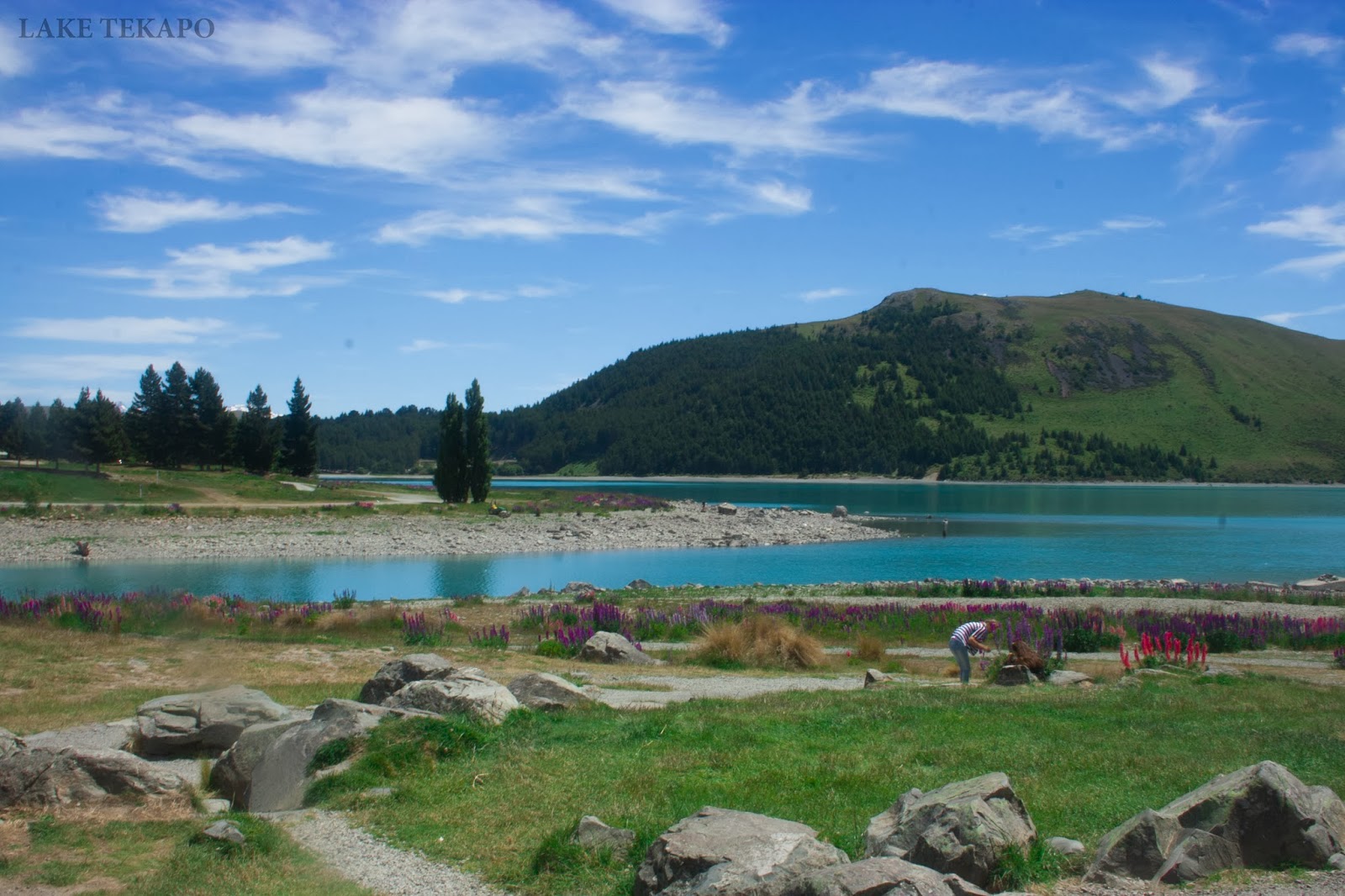
Jyoti and I spent the last couple weeks in New Zealand driving, hiking, a bit of kayaking and snorkelling, but most of all, just breathing in the fresh air and staring in awe at nature's bounty.
 
I know this is supposed to be a blog, but then, a picture says a thousand words. So rather then writing about how we went to A and it was beautiful, and then to B, and it was awesome, and then C which was fantastic, and then soon realizing I have to repeat the same words again, here is a pictorial journey.
 
The only thing I would say is that the drives were as pleasing to the eye as the destinations.